Executive Summary
Summary
These bills would prohibit a school board from banning or refusing to approve instructional materials on the basis that it’s about individual(s) part of protected class.
-
This means books can’t be banned because it has content relating to a person’s race, creed, religion, color, national origin, honorably discharged veterans or person of military status, sexual orientation including gender expression or identity, the presence of any sensory, mental, or physical disability, or the use of a trained dog guide or service animal by a person with a disability
They would also require boards to adopt and/or revise procedures for governing reviews and removals of instructional materials.
-
First, they must try to resolve the issue in a meeting with the parent. Then it gets reviewed by the school principal who authorizes a written decision within a few months. This decision can be appealed once by a parent/guardian to the district.
Key Points
Access to libraries and books is a critical part of a child’s education, growth, and wellness.
-
Exposure to a diversity of stories allows children to understand different people, places, and perspectives, as well as develop their own sense of empathy and critical thinking.
-
Children themselves have a diversity of identities and experiences, and they deserve to be represented.
-
Access to information and free speech is a constitutional right that is increasingly threatened when people try to control what is appropriate for all based on their own opinions.
Source and more information: Blog Post from the Washington Secretary of State on book bannings.
Books bans and efforts to censor materials in schools are widespread across the state and across the country.
-
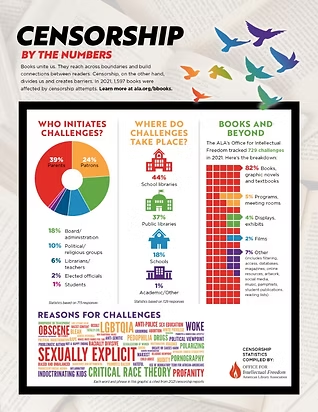
In 2022, there were 1,269 demands to censor library books and resources across the country
-
The majority of these books were written by or about members of the LGBTQ+ community and BIPOC people.
-
Recently, challenges have demanded censorship of multiple titles – sometimes upwards of 100 books at once – as an effort to ban entire categories of books.
-
In 2022, there were at least 17 attempts to restrict access to books in Washington state and school
Source and more information: The American Library Association
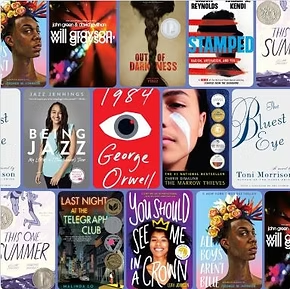
Some book titles that have been challenged or banned across the country, including Washington, and additional censorship data:
Additional Details
Ways to Get Involved
Steps to Get Started
- Learn where the bill is in the legislative process.
- If there is an upcoming hearing, decide how you would like to get your voice heard and take action.
- If there is not an upcoming hearing, or if you want to supplement your advocacy, call or write your legislators.
- Spread the word and get other people on board.
Participating in a Hearing

Sign in Pro, Con, or Other
This is when individuals, advocates, and organizations make their position on a particular bill known for the record. This is particularly powerful in large numbers. Many organizations will send out Action Alerts asking people to sign in Pro or Con on a bill.
Submit Written Testimony
Submitting written testimony is a great way not only to make your position known to legislators but also to explain why in more detail. This is a good option if you don’t want to speak in front of others. People also like to offer more nuance to their position by writing.
Testify Virtually
Since COVID, many legislators are allowing remote/virtual testimony for bill hearings, as it greatly expands access to the legislative process across the state. For this, individuals usually have between 1-2 minutes to state their opinion on a bill in front of the legislative committee on Zoom.