Executive Summary
Background
What are regional supports / Educational Service Districts (ESDs)?
There are 9 ESDs in Washington, and each one is responsible for providing additional supports to local schools in its region. They connect districts and schools to local, state, and national resources. They are often utilized by the state education agencies to help coordinate, implement, and oversee key education programs. Below is a map of the ESDs.
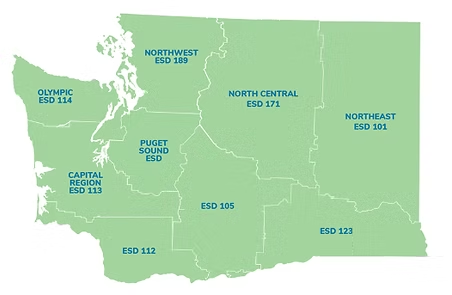
ESDs are often an important way schools coordinate and deliver mental and behavioral health services to their students. Schools rely on them for connections to local, state, and federal money, partnerships with service providers, and training for staff on best practices.
Summary
This bill establishes a new regional school-based mental and behavioral health student assistance program.
-
These regional programs must offer support to school teams on student screenings, referrals, intervention services, and collaborate with ESDs to do so.
-
The Association of ESDs is in charge of coordinating these regional programs. They will oversee that schools are participating, evaluate the program’s outcomes, and coordinate and report back to the state.
The bills asks the Office of the Superintendent of Public Instruction (OSPI) to set up a grant program to support schools with student screenings for emotional distress and best practices for responding.
Finally, it requires OSPI, the Dept. Of Health, school districts, and other school, youth, or health-oriented agencies to do strategic planning around how to best support schools in addressing student mental and behavioral health needs.
Key Points
This bill takes important steps to improve coordination and capacity for student mental health support. Clear roles among state agencies are needed, and this bill helps advance that conversation.
At the same time, this bill is a small step, and many wish to see more comprehensive, systemic reform from our state around the role and resourcing of schools as it relates to mental health. Schools are currently not required to provide mental health services, yet many do, relying on limited resources like local levies or grants. Better coordination is certainly helpful, but only if it leads to clear roles and is accompanied by direct, sustained funding for schools.
Ways to Get Involved
Steps to Get Started
- Learn where the bill is in the legislative process.
- If there is an upcoming hearing, decide how you would like to get your voice heard and take action.
- If there is not an upcoming hearing, or if you want to supplement your advocacy, call or write your legislators.
- Spread the word and get other people on board.
Participating in a Hearing

Sign in Pro, Con, or Other
This is when individuals, advocates, and organizations make their position on a particular bill known for the record. This is particularly powerful in large numbers. Many organizations will send out Action Alerts asking people to sign in Pro or Con on a bill.
Submit Written Testimony
Submitting written testimony is a great way not only to make your position known to legislators but also to explain why in more detail. This is a good option if you don’t want to speak in front of others. People also like to offer more nuance to their position by writing.
Testify Virtually
Since COVID, many legislators are allowing remote/virtual testimony for bill hearings, as it greatly expands access to the legislative process across the state. For this, individuals usually have between 1-2 minutes to state their opinion on a bill in front of the legislative committee on Zoom.