Executive Summary
Summary
*Content Warning*
This bill information page contains content about drugs, addiction, and death.
OSPI, in collaboration with various entities, will have to review & update substance use prevention education materials for middle and high school students.
-
Specifically, they must make changes and additions that include information about the potential lethality and risks of fentanyl and other opioids, along with behavioral health resources.
-
By December 1, 2024, OSPI must make updated substance use prevention education materials available on its public website for use by school districts and community-based organizations.
OSPI will be required to consult with tribes to ensure effectiveness in state-tribal education compact schools.
Annual education on fentanyl and other opioids will be mandated for students in seventh and ninth grades, with the inclusion of information on behavioral health resources.
-
Fentanyl and other opioid prevention education, delivered through health classes or other discretionary programs, must be provided to as many seventh and ninth-grade students as possible during the remainder of the 2024-25 school year and annually thereafter.
Key Points
Background Information:
-
Opioids are a class of drug that have limited safe and legal uses in the state. Opioids include drugs like oxycodone, heroin, morphine, and fentanyl.
-
Fentanyl is a specific type of opioid that is synthetically-made and extremely potent. It can be lethal in very small quantities. Many illegal drugs can be laced with substances like fentanyl, often making them deadly.
-
There has been an epidemic of overdose deaths and drug addiction from opioids since the 1990s that has become even more dire in the past decade.
-
In May of 2023, Lummi Nation hosted the first Washington State Tribal Opioid/Fentanyl Summit: Strengthening Pathways to Healing to specifically address how this issue is affecting American Indian and Alaska Native communities in Washington. One excerpt from the summit’s report reads:
“The impact of opioid/fentanyl addiction in Indian Country is at catastrophic proportions, and Tribal Leaders are worried about their people and their futures. Countless lives and families are falling victim to substance use and addiction and cannot access the treatment and recovery programs they seek.”
-
This crisis is harming young people across the state and across the country. Prevention and intervention education and services can save lives.
Statistics:
-
In 2023, 2 people each day died from opioid overdoses in Washington
-
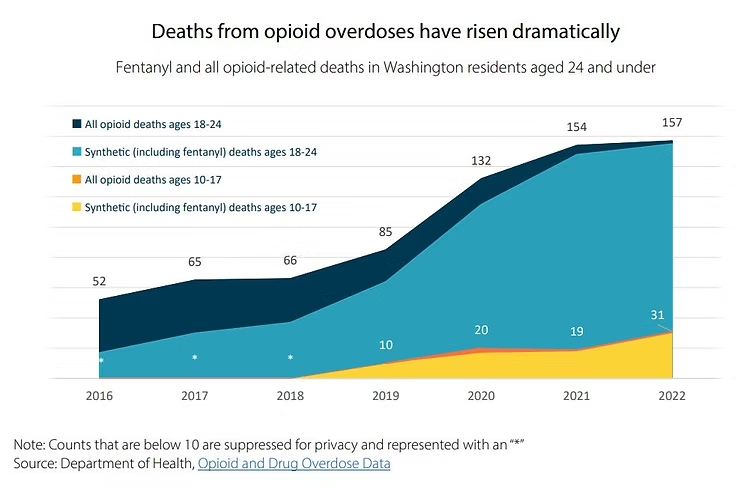
In 2022, 190 young people in Washington died from an opioid overdose, and over 90% of them were specifically from fentanyl.
-
See the graphic for more data
See more information about this issue and this bill by reading this issue brief from the Office of Governor Jay Inslee.
Additional Details
For crisis support:
SAMHSA’s National Helpline
1-800-662-HELP (4357). This is a free, confidential, 24/7, 365-day-a-year treatment referral and information service (in English and Spanish) for individuals and families facing mental and/or substance use disorders
988 is the new, three-digit dialing code for the National Suicide Prevention Lifeline (NSPL).
Compassionate, accessible care and support are available for anyone experiencing mental healht-related distress. Call services are vailable with interpretation services in over 150 languages.
The Trevor Project (LGBTQ+ Youth)
Crisis Line: 1-866-488-7286
Text Line: text START to 678678
Trans Lifeline
Crisis Line: 1-877-565-8860
Other support resources:
Ways to Get Involved
Steps to Get Started
- Learn where the bill is in the legislative process.
- If there is an upcoming hearing, decide how you would like to get your voice heard and take action.
- If there is not an upcoming hearing, or if you want to supplement your advocacy, call or write your legislators.
- Spread the word and get other people on board.
Participating in a Hearing

Sign in Pro, Con, or Other
This is when individuals, advocates, and organizations make their position on a particular bill known for the record. This is particularly powerful in large numbers. Many organizations will send out Action Alerts asking people to sign in Pro or Con on a bill.
Submit Written Testimony
Submitting written testimony is a great way not only to make your position known to legislators but also to explain why in more detail. This is a good option if you don’t want to speak in front of others. People also like to offer more nuance to their position by writing.
Testify Virtually
Since COVID, many legislators are allowing remote/virtual testimony for bill hearings, as it greatly expands access to the legislative process across the state. For this, individuals usually have between 1-2 minutes to state their opinion on a bill in front of the legislative committee on Zoom.